Glass vs. Plastic: Where Switching to Glass Actually Makes Sense
Strawberry & Sprouts · Aug 6, 2026 · 7 min read
If you're looking to reduce the use of plastic in your home, your kitchen is a great place to start. From food storage containers to water bottles and plastic wrap, many everyday kitchen items can be replaced with longer-lasting alternatives.
But creating a more sustainable kitchen doesn't mean throwing away every plastic item you own. When comparing glass vs. plastic food storage containers, the best approach is simple: use what still works, replace damaged pieces first, and choose glass or another durable material when you genuinely need something new.
See below the plastic to glass swaps we recommend and approve!
This post may contain affiliate links. If you purchase through one of these links, Strawberry & Sprouts may earn a small commission at no additional cost to you.
Is Glass Better Than Plastic?
Glass is an excellent choice for many everyday kitchen tasks, especially food storage and reheating. But plastic still has practical advantages. It's lightweight, less likely to break, and often easier for children to carry.
The goal isn't to declare one material universally good and the other universally bad. It's to understand where each one works best — and make more intentional choices for your home.
The Benefits of Using Glass Containers
1. Glass Lasts Longer
A good glass container can remain in your kitchen for years. It may cost more initially, but you won't necessarily need to replace it as frequently as plastic that becomes warped, scratched, or heavily stained.
Glass is breakable, of course, so longevity depends on how and where you use it. In homes with young children, stainless steel or durable plastic may still be the more practical choice for cups, lunch boxes, and snacks on the go.
2. Glass Doesn't Hold Onto Stains and Odors
Have you ever stored tomato sauce in a plastic container and discovered that it was still slightly orange several washes later?
Because glass has a nonporous surface, it doesn't absorb food odors or stains the way many plastic containers can. This makes it particularly useful for storing colorful or strongly scented foods such as tomato sauce, curry, chili, soups, marinated foods, and chopped onions.
3. You Can See What You Have
Clear containers make leftovers easier to spot.
That may sound like a small benefit, but visibility can help prevent food from disappearing into the back of the refrigerator. When you can quickly see what is available, it becomes easier to use leftovers, plan meals, and reduce food waste.
4. Glass Can Make Reheating Simpler
Many glass food containers can move from the refrigerator to the microwave, provided they are labeled microwave-safe. The FDA cautions that some plastic containers should not be used in the microwave because heat from the food can cause them to melt.
Glass is not automatically safe for every temperature, however. Check the label and avoid sudden temperature changes, such as moving a frozen glass container directly into a hot oven.
The First Plastic Item I Would Replace
If you want to make one meaningful kitchen swap, begin with the containers that regularly hold your leftovers.
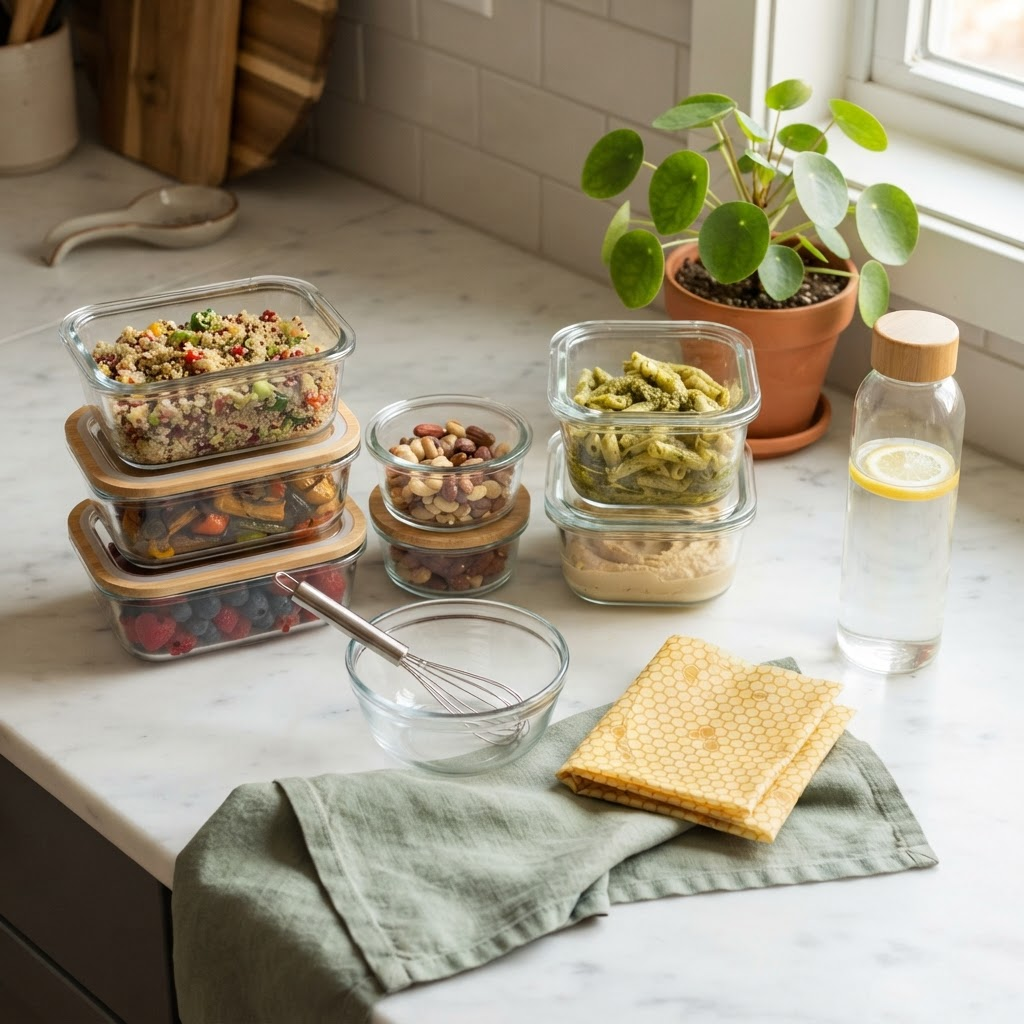
Plastic food containers → glass food containers
Glass is especially helpful for storing hot or strongly colored foods, reheating leftovers, meal preparation, keeping food visible in the refrigerator, and serving and storing food in the same container.
You don't need a large matching collection. Start with two or three sizes that fit the foods your family actually stores. Before buying anything, look through your current containers — match every base with its lid, remove broken pieces, and notice which sizes you use most.
Other Easy Plastic Swaps to Consider
Plastic mixing bowls → glass or stainless steel bowls
Glass mixing bowls can be used for preparing, serving, and in some cases heating food. Stainless steel is lighter and less breakable, making it a helpful alternative if you have young children helping in the kitchen. Look for nesting bowls if storage space is limited.
Plastic water bottles → glass or stainless steel bottles
A reusable bottle is a simple way to reduce your reliance on disposable plastic bottles. Glass works well at home or at your desk, while insulated stainless steel is often more practical for children, exercise, travel, and busy days outside the house.
Plastic pantry packaging → reused glass jars
You don't need to purchase an entirely new set of matching pantry containers. Pasta sauce, jam, and pickle jars can be washed and reused for dry ingredients, homemade dressings, or small amounts of leftovers.
Disposable plastic wrap → reusable wraps or containers
Beeswax wraps can cover bowls or wrap foods such as bread, cheese, fruits, and vegetables. They need to be washed in cool water and kept away from heat, so check the manufacturer's directions before using them.
Should You Throw Away Your Plastic Containers?
No.
Throwing away functional items simply to replace them with new ones isn't necessary. The EPA's waste-management hierarchy prioritizes reducing and reusing before recycling, which supports using what you already have before buying a replacement.
Consider replacing a plastic container when it is cracked or badly scratched, warped, missing its lid, holding persistent stains or odors, or no longer useful for your family.
Progress, Not a Perfectly Plastic-Free Home
A more intentional home isn't created through one enormous shopping trip.
It's created when we begin paying attention: to what we use, what we waste, and what would make our everyday routines a little easier.
Keep the plastic items that still serve your family. Reuse what you can. Replace damaged pieces first. Then, when you truly need something new, choose a material that can stay in your home for a long time.
Start where you are. Progress > perfection.
Frequently Asked Questions
Is glass food storage really better than plastic?
Glass is generally better for storing colorful and strongly flavored foods, reheating leftovers, and long-term durability. Plastic remains practical for children, packed lunches, and situations where breakage is a concern. The best approach is using the right material for each job.
When should I replace my plastic food containers?
Replace plastic containers when they are cracked, warped, badly scratched, missing a lid, holding persistent stains or odors, or no longer labeled for microwave use if that's how you use them.
What is the easiest first swap to make?
Start with your leftover containers — the ones you use to store and reheat food most often. Replacing two or three plastic containers with glass is a meaningful, low-cost change that you'll notice every single day.