"What If I Need It Someday?" How to Declutter Just-in-Case Items
Strawberry & Sprouts · Sep 2, 2026 · 6 min read
You're decluttering, making good progress, and then you pick up something you haven't used in years.
You're ready to let it go when a little thought appears:
"But… what if I need it someday?"
Suddenly, it goes right back into the drawer.
"Just in case" items are some of the hardest things to declutter because they often aren't broken or obviously useless. They're perfectly good things that could be useful under the right circumstances.
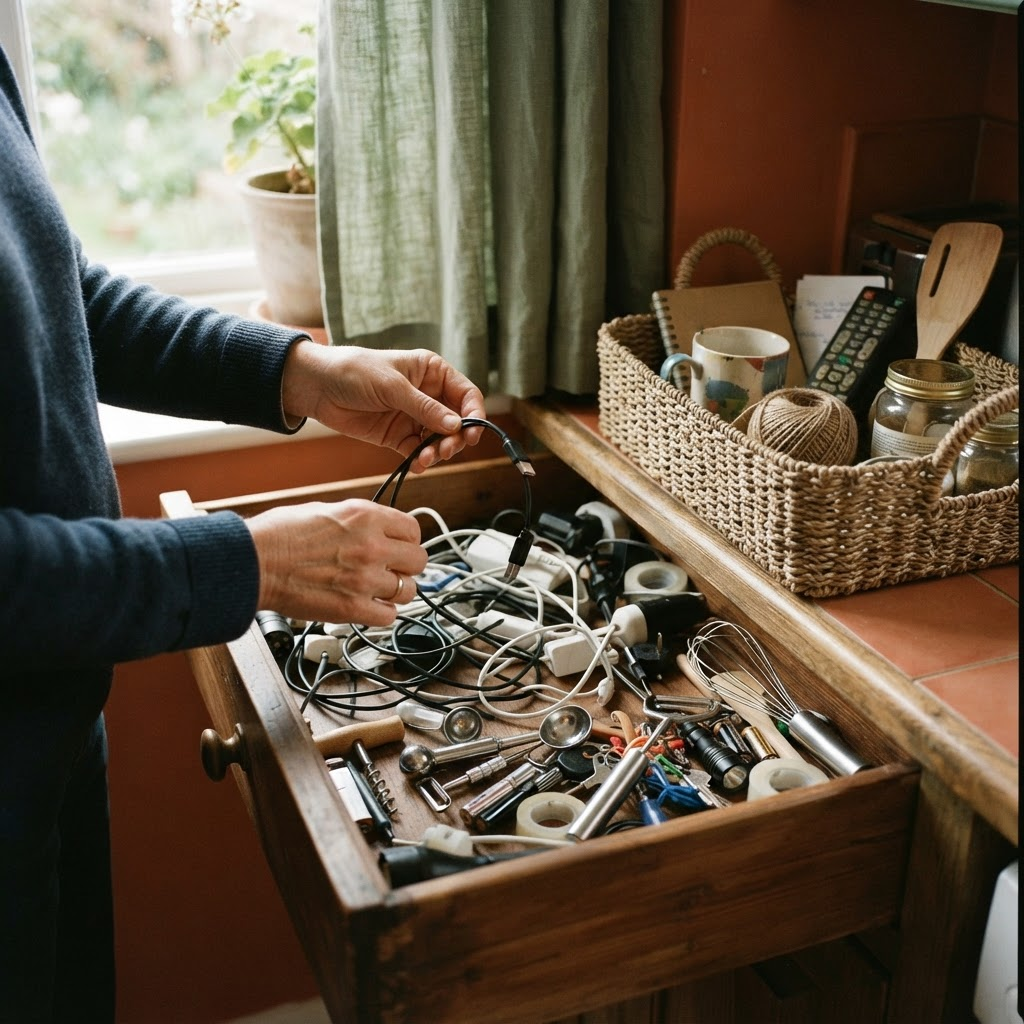
Think extra charging cables, old towels, empty boxes, duplicate kitchen tools, leftover renovation supplies, clothes that might fit again, or that appliance you haven't touched in three years.
So how do you decide what to keep and what to let go?
Look at your real life
Instead of asking, "Could I use this someday?" ask:
"When was the last time I actually used this?"
Almost anything could be useful someday. The better question is whether the item is useful in the life you're actually living.
Your home doesn't have unlimited storage space, so what you keep should earn its place based on more than a hypothetical possibility.
Consider the odds
There's an important difference between rarely used and unlikely to be used.
The roasting pan you pull out every Thanksgiving? You use it predictably, even if it's only once a year.
The mysterious cable you've moved from drawer to drawer for six years because it might connect to something? That's a different story.
When decluttering your home, consider how realistic the future need actually is.
Think about how easily you could replace it
Now imagine you let the item go — and six months from now, you actually need it.
What would happen?
Could you borrow one? Could something you already own do the same job? Could you replace it easily and inexpensively?
Sometimes we give an inexpensive, easily replaceable object years of valuable storage space to avoid the small possibility of buying it again.
Remember: keeping things has a cost, too
We often think getting rid of a perfectly usable item is wasteful. But keeping something isn't completely free either.
It takes up space. It needs to be stored, moved, cleaned around, organized, and eventually dealt with again.
One "just in case" item may not matter much. Hundreds of them can make your home harder to manage.
And sometimes… keep it
Decluttering isn't about getting rid of everything you don't use regularly.
Some "just in case" items absolutely deserve a place in your home: emergency supplies, hard-to-replace belongings, specialty tools you predictably need, or expensive items you know you'll use again.
Preparedness isn't clutter.
The goal of intentional decluttering is simply to distinguish between preparing for a realistic need and storing things for every imaginable future.
Your home doesn't have to be prepared for every maybe someday. It needs to support the life you're actually living today.
Frequently Asked Questions
What are the most common items people tend to keep "just in case" they might need in the future?
Some of the most common "just in case" items are extra cords and chargers, empty boxes, old towels and sheets, duplicate kitchen tools, reusable bags, glass jars and containers, gift bags, leftover paint and renovation materials, old electronics, clothes that might fit again, craft supplies, spare furniture, and things we intend to repair someday.
What makes these items difficult to declutter is that many are still perfectly usable. Instead of asking whether something could be useful, consider how likely you are to actually use it.
How do I know if something is clutter or worth keeping?
Ask yourself whether you have a realistic and predictable use for the item. Something you use once every year can absolutely be worth keeping. Something you haven't used for years but can imagine needing under very specific circumstances may be a better candidate for decluttering.
What if I get rid of something and regret it?
Before letting something go, consider what you would do if you needed it again. Could you borrow one, use something you already own, rent it, or replace it easily?
You don't need a guarantee that you'll never need an item again. You're deciding whether the possibility of needing it is worth the space required to keep it.
Is it okay to keep things for emergencies?
Absolutely. Preparedness and clutter are not the same thing. First-aid supplies, flashlights, emergency equipment, and other items kept for a specific, realistic need can have an important purpose even if you rarely use them.
The goal of decluttering isn't to own as little as possible. It's to make thoughtful decisions about what deserves space in your home.