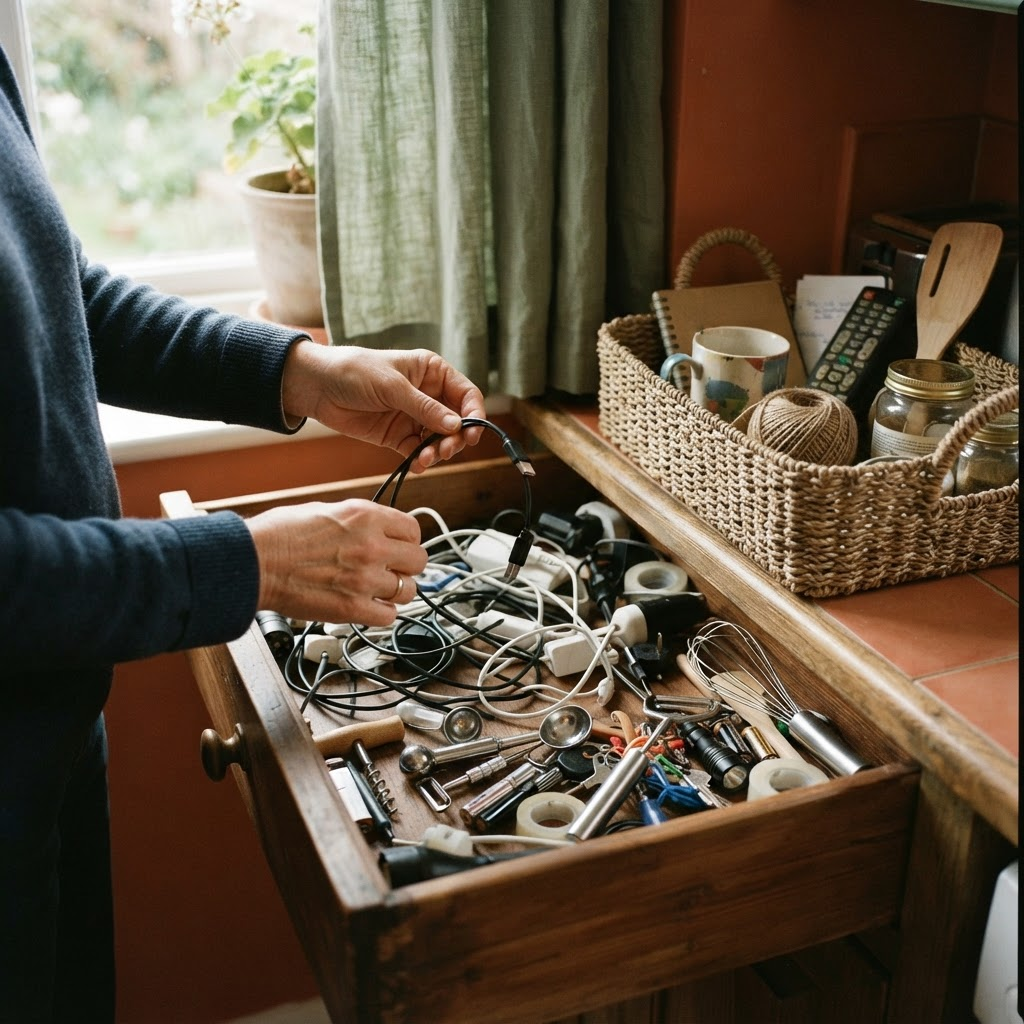
5 Simple Home Systems That Stop Household Chores From Piling Up
Jun 29, 2026 · 8 min read
If you've ever wondered how some people seem to stay on top of household chores without spending every weekend cleaning, the answer probably isn't motivation — it's systems.
Whether you're trying to create better home organization habits, simplify homemaking, or stop everyday tasks from piling up, behavioral psychology offers surprisingly practical solutions.
The good news is that you don't need more discipline or a complete lifestyle overhaul. Small, repeatable systems reduce decision fatigue, lower mental clutter, and make it easier to keep your home running smoothly.
These five science-backed systems are simple enough to start today, yet powerful enough to change the way you manage your home over time.
1. The 2-Minute Rule for Household Chores
Productivity consultant David Allen introduced this principle in his Getting Things Done methodology, and it remains one of the most effective home management strategies: if a task takes less than two minutes, do it immediately. Don't add it to a list, don't schedule it, and don't tell yourself you'll get to it later. Just do it.
Hang up your coat when you walk in. Rinse your dish after using it. Put your shoes away instead of leaving them by the door. Reply to the quick text instead of letting it sit unread.
The reason this works goes beyond simple efficiency. Every small task you complete gives your brain a small reward signal, helping build momentum — and momentum is often more important than motivation. Meanwhile, every postponed two-minute task quietly increases your mental load, making your home and your mind feel more cluttered than they really are.
Try this: For one day, follow the 2-Minute Rule whenever possible. Notice how much lighter your evening feels.
2. Use Implementation Intentions to Build Better Habits
Here's an uncomfortable truth: vague intentions rarely become consistent habits.
"I'll tidy up later." "I should unload the dishwasher." "I'll organize that tomorrow." Those aren't plans — they're wishes.
Psychologist Peter Gollwitzer's research on implementation intentions found that people are much more likely to follow through when they create a simple "When X happens, I will do Y" plan. Instead of relying on memory or motivation, you create an automatic trigger.
For example:
- When I finish my morning coffee, I'll wipe down the kitchen counters.
- When I take off my shoes, I'll put them directly in the closet.
- When the dishwasher finishes, I'll empty it before checking my phone.
The cue becomes the reminder. Your environment does the remembering for you.
Try this: Write down three implementation intentions for chores you tend to postpone. Make the trigger as specific as possible.
3. Temptation Bundling: Make Chores More Enjoyable
Behavioral economist Katherine Milkman developed the concept of temptation bundling: pairing something you need to do with something you genuinely enjoy. In one of her best-known studies, participants who could only listen to an engaging audiobook while exercising visited the gym 51% more often than the control group.
The same principle works beautifully for homemaking. The key is exclusivity — your enjoyable activity should happen only while doing that specific chore.
- Listen to your favorite podcast only while cleaning.
- Save your favorite playlist for laundry day.
- Watch a guilty-pleasure show only while folding clothes.
- Enjoy a special coffee or tea only during your weekly home planning session.
Over time, your brain begins linking the enjoyable activity with the task you once avoided. The chore doesn't become easier — but it becomes something you're much more willing to start.
Try this: Choose one recurring chore you've been avoiding and pair it with one enjoyable activity for the next two weeks.
4. Habit Stacking for Easier Home Organization
James Clear popularized habit stacking in Atomic Habits, building on decades of behavioral psychology research. The principle is simple: after something you already do, immediately do something else. Instead of creating an entirely new routine, you attach a new habit to one that's already automatic.
- After I make the bed, I'll spend two minutes wiping down the bathroom sink.
- After dinner, I'll clear and wipe the table.
- After I brew my morning coffee, I'll check that the kitchen sink is empty.
Wiping the counters immediately after making coffee takes less than a minute, but it changes how the entire kitchen feels for the rest of the day. The secret is to start incredibly small. Once the habit becomes automatic, you can gradually expand it.
Try this: Choose one daily habit you already do without thinking. Attach one simple household task to it starting tomorrow.
5. Create a Daily Home Reset Routine
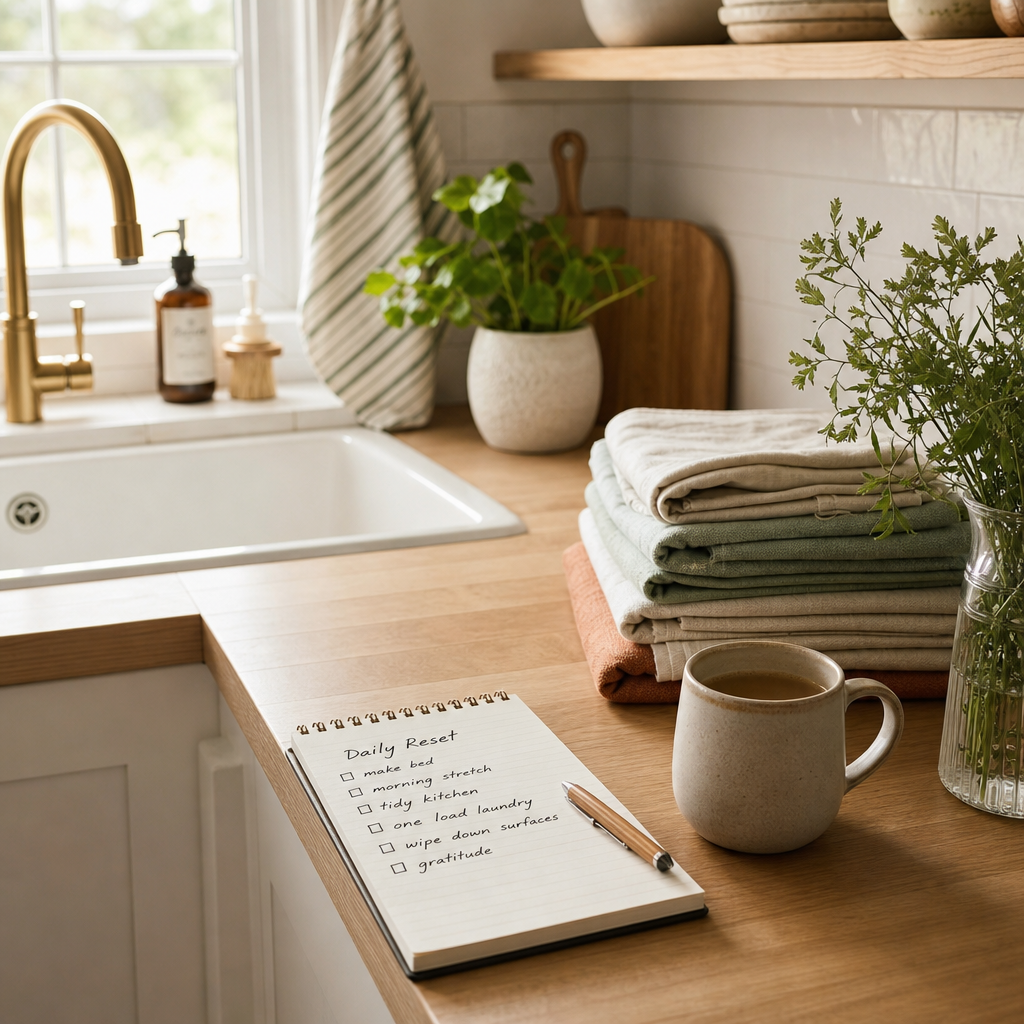
While the previous systems help with individual tasks, this one helps your entire home. A daily home reset is a short maintenance routine — usually five to ten minutes in the morning and another five to ten in the evening — that brings your home back to a comfortable baseline each day.
It's not deep cleaning. It's preventing clutter before it becomes overwhelming. Research suggests that orderly environments can reduce stress and improve focus, and beginning and ending your day in a tidy space often feels mentally lighter than waking up to yesterday's unfinished tasks.
Morning reset (5–7 minutes)
- Make the bed.
- Empty or clear the kitchen sink.
- Wipe the counters.
- Start a load of laundry if needed.
- Return a few obvious out-of-place items.
Evening reset (5–10 minutes)
- Clear and wipe kitchen surfaces.
- Load the dishwasher or wash dishes.
- Spend two minutes tidying the living room.
- Lay out what you'll need tomorrow.
- Walk through the house and return one item to its home in each room.
The goal isn't perfection. It's creating a home that's pleasant to wake up to.
Try this: Commit to an evening reset for one week and notice how your mornings begin to feel.
When Household Chores Already Feel Overwhelming
Even the best systems break down sometimes. Busy seasons happen, routines get interrupted, and laundry piles up. When that happens, don't try to fix everything at once. Follow this simple reset protocol instead.
Step 1: Identify the three tasks creating the most mental clutter. Don't look at your entire to-do list — choose the three tasks that keep popping into your mind. Those are your priorities.
Step 2: Do the one you've been avoiding most. Brian Tracy calls this "Eat That Frog." Completing the task you've been dreading often creates more relief than finishing several easy ones.
Step 3: Practice self-compassion. Research by psychologist Kristin Neff shows that self-compassion leads to greater resilience and motivation than self-criticism. Feeling guilty about the pile-up won't help you move forward — starting with one small step will.
Step 4: Return to one system. Don't try to rebuild every routine today. Pick one of the five systems above and practice it consistently for one week before adding another.
Frequently Asked Questions
How do I stop household chores from piling up? Focus on small daily systems instead of marathon cleaning sessions. Habits like the 2-Minute Rule, habit stacking, and a daily home reset help prevent chores from accumulating.
What is the best daily cleaning routine? A simple morning and evening reset usually works better than saving all your cleaning for the weekend. Short daily routines are easier to maintain and reduce overwhelm.
How can I stay motivated to clean? Motivation comes and goes — systems are more reliable. Environmental triggers, habit stacking, and temptation bundling make it easier to follow through even when you don't feel motivated.
What's the easiest way to organize your home? Start with one small habit instead of trying to organize your entire home at once. Consistent daily routines create lasting change over time.
Small Home Systems Create Lasting Change
None of these systems are complicated. They don't require more willpower, and they don't require a perfectly organized home. They simply make everyday chores easier to manage.
One dish washed instead of left in the sink. One small habit attached to your morning coffee. One evening reset before bed. Those small choices compound. Over time, they create a home that feels calmer, more organized, and easier to care for — not because you're working harder, but because your home is supported by simple systems instead of constant decision-making.
At Strawberry & Sprouts, we believe homemaking isn't about perfection. It's about creating a home that gives you more space for what matters most: sharing meals, making memories, and enjoying the people who live there.
Start with just one system this week. That's enough.